• Resume
  • What's New
  • Papercraft Models
  • Archives
  • About Me
Menu

Rocky Bergen

ARTIST & DESIGNER
  • Resume
  • What's New
  • Papercraft Models
  • Archives
  • About Me

I was first introduced to the blue Commodore PET with the colourful chicklet keys by my Computer Science teacher back in 1990 and the form factor has been an influence ever since.

Commodore PET/CBM 2001 - Papercraft Design

February 14, 2021

The link to the PET papercraft can be found at the end of this post.

The Commodore PET has consistently been one of the most requested models but I have held off on making one as there already was a pretty great one on the internet. About a half year or so ago, I noticed the link to that model had broken and I took that as a sign to make my own.

I grew up with a Commodore 64 and I had seen a few VIC-20s but when my Computer Science teacher brought in his Commodore PET, released in 1977, I went bananas for the thing. The styling of this machine was so striking, even in its day, there weren’t many computers that could rival the presence of this machine. The first thing that struck me was the size of this beast, a footprint rivaling the PC XTs we were using at the time, and topped with the funkiest blue trapezoid you’ve every laid eyes upon. Following that, my eyes were drawn to that amazing/awful calculator keyboard. I am typing on a Apple chicklet-style keyboard today, but it doesn’t begin to reflect the sponge and springs experience that was the PET. The fact that all the keys were in a perfect grid pretty much made touch typing impossible. The keys on my teacher’s computer had received a generous coating of clear nail polish. He told us that this helped to keep the printing on the keys from rubbing off. I only used it for about a minute but if this isn’t the worst keyboard in the history of computers, I’d be curious what could be worse.
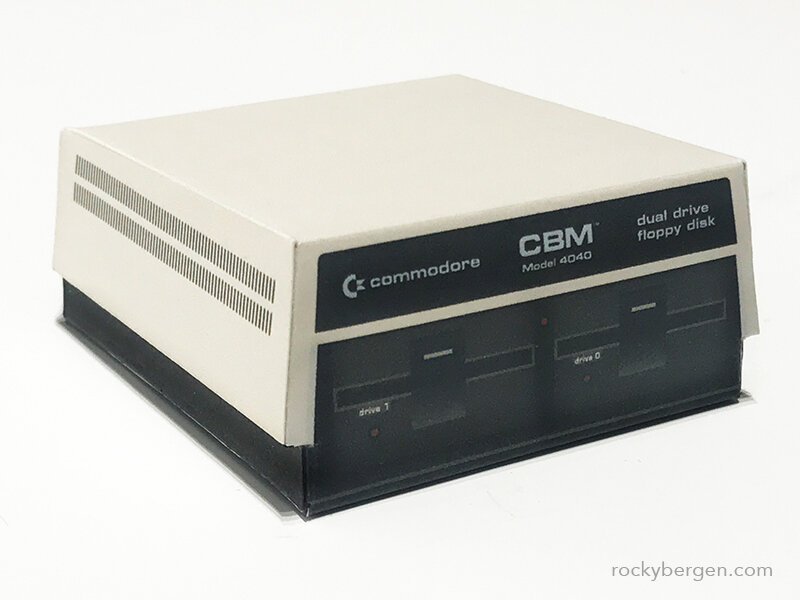
Commodore’s Floppy Drives were almost as large as the actual PET.

Commodore’s Floppy Drives were almost as large as the actual PET.

Our teacher had also brought in a disk drive and also brought in a few 8” floppy disks for us gaze at in disbelief. All in, my time with the PET measures in mere minutes, but the impression can still be seen today. I don’t know if I would ever have developed an appreciation for vintage computers had it not been for my time with that computer. I wonder if I would have ever made a single paper model if I had not been in that class thirty some years ago.

The PET ecosystem is quite large, so there are plenty of accessories included in this design.

Once again, I need to give an extra special warm shout out to my good buddy George, who selflessly took time out of his life to help me test fit, assemble and photograph all the completed models in today’s post. He’s a testament to how clean my models can look. :)

Also, as I continued to research the design of the PET, I came to realize that when including the CBM line there are at least a dozen slight variations on this machine, with different badging, cassette players, colours, etc. While only two PET designs are shown in these photos, there are a total of four variations included in this pattern, including a CBM machine with a full-sized keyboard.

The PET 2001 front

The PET 2001 back

Even though this was the early days at Commodore, I can see how this setup will have inspired many pioneers in the industry with it’s 2001 good looks and Pet Rock charms. The number of games that were produced for a machine with such a limited display is also impressive. I have also included a series of swappable screen plates so that you can have your model play all of your favorite games.

All lined up!

Please tell me about your experiences with the PET by commenting below. What other systems should I turn into a papercraft? Please leave a like if you like.

See all of my retro computer models here.

Thank you to my Computer Science teacher and George for inspiring and helping brings these surreal tiny experiences to life. The link to the Commodore PET/CBM 2001 can be found here.

In Commodore, Industrial Design, paper craft, papercraft, CBM Tags commodore, pet, pet 2001, cbm, cbm 2001, 1977, retro, retrocomputer, free, paperart, papercraft, design, industrial design, model

Apple Macintosh 128K - The computer that “started it all”, complete with bundled software.

Apple Macintosh 128K - Papercraft Design

May 24, 2020

The free Apple Macintosh papercraft pattern can be found at the end of this post.

The Macintosh came out in January of 1984, just one year after Apple launched the ill-fated Lisa computer. While Lisa introduced early adopters to modern computing, the Macintosh brought these concepts to the masses. Using a graphical interface with a mouse and keyboard is something we take for granted today but in 1984 it was bleeding edge.

The side of the Mac is interesting. I have been informed there is a programmer interrupt switch which can be clipped through the vents. This monitors machine code and is useful in programming. I thought it was a power switch but the community has spoken! :)

I can’t pretend I have a lot of experience with these early Macs. We had Apple II’s in my elementary school and when I was in high school we learnt on XTs and later on 386s. The first time I saw a 128K Mac with my own eyes was in 1996 at my university in one of the computer labs.

Despite have no hands on experience, there is no denying the appeal of this Mac’s form factor. Many of the innovations that appeared in the Lisa a year earlier are back - refined and ready for prime time. It is easy to see how this machine would help usher in a new era in modern computing.

The Mac 128K came with Macwrite and Macpaint. Neither of these are around these days but they served as inspiration for software we commonly use today.

Apple’s packaging also received a more modern look when compared to the Lisa materials. Brand standards were tightened up some to provide a more consistent look and feel throughout. The time-honoured tradition Apple of including Apple stickers with their products seems to have been born with the Mac 128K release. Also, Apple was happy to help you finance your new Mac purchase with their very own Apple credit card (Apple Pay was not the first).

Possibly the most interesting items, were the cassette tapes that Apple provided as a quick start guide for the Mac OS, and the included MacWrite and MacPaint. A multi-media experience was much more literal in 1984 and so creativity (and a cassette player) was required.

Disk drive and disks.

Mac from the back.

Keyboard with optional number pad.

The Mac mouse will have been the first mouse many people will have ever used.

Once again, special thanks goes to my buddy George. He assembled and photographed all the items in this post. With the pandemic keeping me at home, I don’t have access to all the things I need to make these posts. George is both a professional photographer and master paper folder which makes him a valuable and highly skilled ally. You’re the best!

I did my best to limit the game selection to ones that ran on a 128K machine.

I hope you enjoy building this Macintosh 128K. The Apple community has always been super-supportive of my efforts so I am always happy when I can give something back.

For my next papercraft projects, I am working on a highly-requested British computer, and then a highly-requested US computer, followed by another non-computer (but retro) papercraft just to mix things up a bit!

You can download the Apple Macintosh 128K papercraft model here.

In Apple, Macintosh, art, Design, Illustration, Industrial Design, paper craft, papercraft Tags apple, Macintosh, retro, retrocomputer, papercraft, paperart, pattern, design, industrial design, case design

My girlfriend requested a VIC-20. I didn’t know but in the early days she grew up programming on one.

Commodore VIC-20 - Papercraft Design

May 2, 2020

This Commodore VIC-20 pattern can be downloaded at the bottom of this post.

I wanted to send out a tremendous thank you to all the new followers and visitors to the site. I know many people might be looking for: 1. unique things to do 2. at home 3. on a limited budget 4. using available supplies. I feel these models are a great way to spend an evening and learn a thing or two about retro computers. Possibly even build your own retro museum. I try to stay as close to the source materials as I can using images that I usually source from the internet.

Due to the current global health crisis, I am working from home and don’t have access to the tools I use to test build and photograph these models. An extra special thanks to the always amazing George Blanc for doing a test assembly and providing me with the excellent photos for this post. If you are ever looking for a great product photographer (or paper folder), he is one of the best.

I created a Commodore 64 papercraft model as one of my first models and based this VIC-20 model off of that design so all the accessories shown should work with the C64 design as well.

The accessories with this model are size compatible with my earlier C64 design.

When my girlfriend told me she used to have a VIC-20 I did an image search for the different breadbins and asked her which one she had. There were at least three possible candidates but she was probably 10 when she last saw the computer so I decided to make all three (George folded and glued them all - you rule). Apologies to my German fans, I have not made the VC-20.. yet.

Three variations of the Commodore VIC-20 breadbin to suit your personal nostalgia.

Designing early 8-bit home computers can be an interesting experience. Many of today’s standard components like monitors were considered nice-to-have’s in the early 80s. A branded monitor wasn’t marketed to consumers at first so I did my best to replicate the television shown on many of the VIC-20 boxes that graced store shelves. Anyone care to guess what the specific brand/model of television in being used?

Commodore VIC-20 side view.

It’s always a challenge to say when enough is enough as far as the level of detail is concerned. I love doing little accessories like disks, cassettes and in the case of this VIC, some cartridges. The cartridge bay on the back of the pattern is not by default able to accept these cartridges. I try to consider the scale of the models and a general audience when making these designs and I think even George may have balked at the idea of making three keyboards with working cartridge slots. That being said, plenty of people have taken my patterns and pushed them further by making all sorts of working drive bays and ports. It is possible to adapt my designs with some extra imagination. If I had more time, I would release variations of each of these patterns to cater to different skill-levels. As you can see, the papercraft collection keeps growing so given enough time, I feel anything is possible!

Commodore VIC-20 rear with 16K RAM Expander cartridge.

Commodore VIC-20 rear with 16K RAM Expander cartridge.

Hopefully I can get my girlfriend a real VIC-20 someday soon but in the meantime I hope she will accept my (erm, and Geroge’s) gift of the papercraft VIC.

Thanks again to the community for your many suggestions of computers to do next. I have assembled a list of the “Top 5 most-requested computers” and was surprised and excited by what I saw. Do you want to know what the next five designs are going to be? Let me know in the comments below. I am willing to share but can keep it a surprise if that’s what you’d prefer. ;)

You can download the Commodore VIC-20 papercraft model here.

In Commodore, Design, papercraft, paper craft, Industrial Design, VIC-20, art Tags commodore, VIC, VIC-20, paperart, papercraft, retro, retrocomputer, computer, relationship, community, download, pattern, pepakura

The Dancing Demon has as much character as an ASCII-type creature can have and made for an excellent if unofficial product mascot.

TRS-80 Model III - Papercraft Design

November 13, 2019

Some computers I know really well. I grew up around Apples and Commodores but when it comes to the Tandy / Radio Shack series of computers released throughout out the early half of the 80’s I don’t know much. When it came to Radio Shack computers I have always been more familiar with the Tandy PC Compatible series of computers released much later.

While the Model III was targeted towards the business market, I was pretty impressed with how effortlessly it was able to throw the ASCII-type graphics around the screen. The Dancing Demon, a new personal favorite, has delighted TRS-80 users for dozens of years now.

The system boot up.

Rear of the model is surprisingly clutter free, being largely a self contained design.

As with most systems from this era, manuals provided users with invaluable first steps.

Thanks to the wonders of RetroPie I have had an opportunity to try a number of games on the system. For a machine without any custom graphical capabilities, the TRS-80 has a pretty extensive lineup of games. While clearly primitive, the amount of expressiveness many of these games have is impressive.

A little too late for Halloween, but it is amazing how much character could be given to games produced with this machine.

While I did not grow up with this computer, Radio Shack’s TRS-80 series of computers has impressed me with its longevity as a platform and wide variety of games.

If you like “less common” systems like the Model III please consider leaving a like or a comment. Which system should I do next?

My next system will not be a computer but I will be something from my youth that promoted over the holidays and somthing I always wanted but did not get until I was much older.

You can download the TRS-80 Model III design here.

In paper craft, papercraft, Industrial Design, Design, Retro Tags TRS-80, Radio Shack, Tandy, computer, retrocomputer, Model III

Apple’s Lisa 1 was launched in January of 83. Geared towards the business market, Lisa ultimately was instrumental in the design of the more successful Macintosh line of computers.

Apple Lisa 1 - Papercraft Design

October 19, 2019

I am very happy to present to you the Apple Lisa papercraft pattern which can be found at the bottom of this post. This was the third pattern I created behind the Amstrad CPC 64 and Commodore 64. My confidence must have been at an all-time high when I embarked on this one because it took until this week to finally complete this one. While this is one of the more detailed projects I’ve completed, getting this pattern to fit together reliably was a frustration. I put this this model on hold three times during its development. Every few months, people interested in this model would encourage me to get back to it. Finally, a fellow (amazing) papercrafter, George agreed to help me finalize the last of the model. Had it not been for his encouragement, I suspect this may not have seen the light of day this year.

Lisa I from the rear

GUIs were foreign to everyone but XEROX users in 83, so a series of integrated reference cards could be pulled from the bottom of the keyboard.

The Apple Lisa was the first to introduce a Graphical User Interface to the masses (ie: wealthy early-adopters) and was aimed on the business community as they would be the only ones at the time who would be able to justify the US$9,995 ($25K in today’s dollars). Apple’s Mac Pro could be viewed as the Lisa’s contemporary and fully speced systems retail for as much as $35,000 meaning top tier Apple hardware still remains out of the hands of most consumers.

Jobs is somewhat (in)famous for his XEROX visit and the subsequent release of LISA OS and the inclusion of a mouse. Of course how everything plays together ultimately determines a computers success and the Lisa was full of great ideas that simply had not matured enough to be reliable.

Lisa running LisaDraw, an early graphics program.

Lisa’s “Twiggy” Fileware drives and disks were an Apple innovation and were exclusively used in the Lisa 1. Twiggy was a reference to the famous model of the 60’s referred to the thinness of the disks. The Twiggy drives were slow and unreliable, resulting in the release of the Lisa 2 just a year later which housed the more common and practical 3.5” disks.

LisaDraw - Packaging was excessive in 83, before online documentation became the norm.

Fileware disks - While they look a lot like common floppy disks, Fileware disks were a proprietary Lisa format and were prone to failure.

The Lisa was an important computer in that it paved the way for a lot of what we take for granted today. It could be seen as the first modern computer sold to the public and was certainly the instrumental in the development of the Macintosh.

If you are anything like me, the idea of owning a Lisa is out of the question but a papercraft version is free and will take up far less space. I would encourage you to give it a try and please check out my other computers to build your very own miniature computer museum.

You can download the Apple Lisa 1 papercraft here.

Please consider sharing this post as it always helps me share these projects with other retro fans!

Lisa

In Apple, Industrial Design, Illustration, papercraft, Retro Tags apple, lisa, computer, retrocomputer, fileware, twiggy, mouse, 1983

I don’t know if it gets much more 90s than this!

Amiga 500 - NEW ART - Papercraft Design

August 8, 2019

The Amiga 500 NEW ART designs can be downloaded at the bottom of this post.

Thank you Germany for being such steadfast fans of the site! As a way of giving back to the community I have reproduced some very limited designs for the German market. This edition was designed in 1989 by a well-know television and radio presenter, Stefanie Tücking.

Readers with exceptional vision may have noticed that I have also adjusted the keyboard to the German layout. For those of you who prefer your German Amigas unadorned, I have also included a plain Jane Amiga 500 with this adjusted keyboard configuration in the pattern link below.

Grid Design

Leopard Print

My ultimate dream is to visit Germany and show my papercrafts at a (few) retro computing event. I always tell my girlfriend that’s when I will have made the “big time”. I live in Canada but my heart is in Germany. I would love to immerse myself in the German culture if only for a while.

Detail of the Grid design, please observe the German keyboard layout.

Detail of the Leopard Print design. I can’t decide which crazy design I like more!

Limited editions were certainly less prevalent in 90s which made them extra special. Nowadays, limited editions are released every week which seems less special to me.

If you like these papercrafts please consider leaving a like. I find the hearts very encouraging. Also consider following @rockasoo on both Twitter and Instagram to stay up to date with my papercraft projects.

You can download the Amiga 500 NEW ART papercraft here.
You can download the Amiga monitor and additional accessories here.

In Amiga, Commodore, Design, papercraft Tags amiga, 500, computer, retrocomputer, Commodore, paperart, papercraft

Akumajou Dracula (Castlevania) for the Sharp X68000 was significant step up from what was possible from the Famicom - This version of the game was later released on the Playstation as Castlevania Chronicles.

Sharp X68000 - Papercraft Design

May 25, 2019

The pattern for the Sharp X68000 can be found at the bottom of this article.

I lived in Osaka, Japan roughly from 2000 - 2005 and I loved to visit Den Den Town, Osaka’s amazing electrics district. Thankfully for my pocketbook, I wasn’t a hardcore collector of video games at the time. I would usually visit the district to hunt for film photography gear (35mm and medium format, lomo), old Japanese pop mini CD-singles (Chara, UA, Spitz to name a few), and “collectable” Pepsiman bottletops. If you were in the market for Maid Cafe’s, Anime Shops, or 8 floors of pornography, it was all to be found in Den Den Town.

Even though vintage tech was not the mission, it did not prevent me from window shopping and drooling over the vintage tech. Den Den Town is the only place I have ever played a Vectrex or the Atari Jaguar. In the shops of Den Den Town, I was easily able to survey all the vintages of PC Engine, Nintendo’s Pong consoles, Wonderswans, and NEO GEOs, oh my!

Near perfect arcade ports were a mainstay of the X68000 - Here’s Bubble Bobble.

It was only once I got back to Canada and through YouTube, learned about the Sharp X68000. This machine is a real arcade powerhouse with it’s many arcade perfect ports. For years, I was relegated to listening to my favorite X68000 soundtracks like Overtake, Akumajo Dracula, Phalanx, Asuka120% Burning Fest, Genocide 2 and Magical Blocks Carat. Most of what I knew about the system was shrouded in mystery until I set up my RetroPie system. Now that I can play many of these games myself, I can agree that this machine would have been an amazing thing to behold back in that late 80’s when it was first released. Both my girlfriend and I love playing Bukame Death, an obscure X68000 exclusive.

Some of the best console ports came to the X68000 as well.

Speakers can be detached and placed beside the system.

A papercraft version of this machine is sufficient to scratch my itch to buy a machine of my own. Honestly, the logistics of running such exotic hardware outside of Japan is well beyond the scope of my time or money reserves.

Sound was another area where the X68000 excelled and Overtake is one of my favorite soundtracks to any racing game.

I don’t know if this model will have the ability to “Make Your Dream Come True” as advertised on the side of the case, but it’s a pretty fun activity and a great way to learn a little more about this standout system. This papercraft features interchangeable screens and detachable speakers so you can further customize your X68000 experience.

Download the Sharp X68000 papercraft HERE.

If you like this model and would like to see more papercraft models on my site, please consider leaving a like. It really helps me out!r

In sharp, Retro, videogame, papercraft, paper craft, Industrial Design, Design, art Tags sharp, x68000, computer, retrocomputer, arcade, paperart, papercraft, pattern, pepakura

The Atari ST was something I only saw a couple of times while shopping in the “big city”.

Atari 520 ST - Papercraft Design

February 9, 2019

I am happy to present a new papercraft design, the Atari 520 ST. This design is free to download and build, a link can be found at the bottom of this post. It is the perfect way to start a miniature computer museum in your home.

I have also created many other retro computers papercraft models, to see them all click here.

I chose to create an early Atari ST design, this machine does not have a built-in disk drive.

The left side of the computer had a cartridge slot.

I have created seven retro machines and I thought it was time to build an Atari. I have always been a big fan of the Atari 2600 and the many arcade tiles released by the company. I also purchased a pristine Atari 800XL at a local flea market for the bargain price of $20.

But my experience with the ST line is largely limited to a few remote school yard conversations about which was better the Amiga or the PC. The Atari might have been mentioned for its superior MIDI capabilities but in grade 9 in 1991, this had no real life application to our lives.

It’s only much later in my life through YouTube that I have been reintroduced to the ST and it’s many hidden gems.

Escape from the Planet of the Robot Monsters has some amazing graphics.

Many manufacturers produced Atari’s SC1224 monitors. This is the Goldstar version.

Atari SC1224 rear view. My papercraft monitors are becoming more true to the original designs.

Whenever I add extra geometry into the models I design, I always try to maintain an degree of simplicity. Typically these extra folds provide more strength, are more true to form, and do not add much extra difficulty. Be patient, these monitors look great when complete.

Atari 520ST - Rear. Atari’s were known for their superior MIDI capabilities out the box.

While less familar with the Atari ST than some of the other computers I have rendered in paper, I am very pleased with how this design turned out. Typically my favorite design is the last one I completed and the Atari ST came together amazingly. I am proud to share it with the Atari ST and greater retrocomputing community.

While the computer may lack an internal hard drive, it has a much smaller footprint than it’s Amiga 500 counterpart.

As with all of my retrocompter designs, the monitor has eight interchangeable screenplates, so you can further customize your desktop experience.

Atari SF354 - Floppy Drive. This is my first time to make time 3 1/4” disks.

The pattern includes a “functional” drive bay door.

Atari 520ST - Dungeon Master

If you like these designs and would like to see more papercraft computers in the future please feel leave a like below or free to leave a comment below. I read them all.

The Atari ST 520 papercraft pattern can be found here.

In Atari, Retro, papercraft, paper craft, Mock-up, Industrial Design, Design, art Tags atari, st, 520, atari 520st, retrocomputer, computer, 1990's, papercraft, video games

Oregon Trail was my first exposure to the Apple II on our classroom computer back in the 80s.

Apple II - Papercraft Design

November 27, 2018

I am happy to present my latest papercraft project, the Apple II. This pattern is free for you to download from the link at the bottom of this post.

I have often spoken fondly of my time with the Commodore 64, but I also grew up with the Apple II in my school. I always thought of these systems as school computers and while fun to play with, I always saw these as serious machines.

Karateka - Great graphics, difficult to master

Lode Runner - Classic on the Apple II

As a young Commodore 64 user, I was shocked to discover that school’s Apple II did not have BASIC in memory.

Growing up, the only game I ever played on the Apple II is Oregon Trail because that was the only game our school had. I was already pretty obsessed with computers and always hungry for more exposure. Thankfully the Internet happened and now I can experience this machine in a multitude of ways, which happens to include creating and sharing this papercraft pattern (link at end of post).

The Apple’s wedge shape, makes it ideal for a papercraft interpretation.

Handsome profile.

Please click HERE to download the Apple II papercaft pattern. I think this is the perfect project to occupy the family over the holiday season.

If the Commodore 64 is more you jam, you can download that pattern HERE!

If you would like to see more retro papercraft consider leaving a like below, it helps me gauge what I might want to do next!

In Design, paper craft, Apple, Industrial Design Tags paperart, papercraft, apple, computer, retrocomputer, 8-bit

The Commodore 64 paper craft project is finished. Please enjoy, link below.

Commodore 64 Paper Craft

April 5, 2018

I love technical illustration and work as a package designer so a paper craft seemed like a good challenge. Share in the fun and download the Commodore 64 paper craft

Read More
In paper craft, Retro, Graphics, Design, Commodore, Industrial Design Tags retrocomputer, retromancave, C64, commodore, paperart, papercraft, computer, design, c64mini, download, free
smb_1-1_v001_social.png

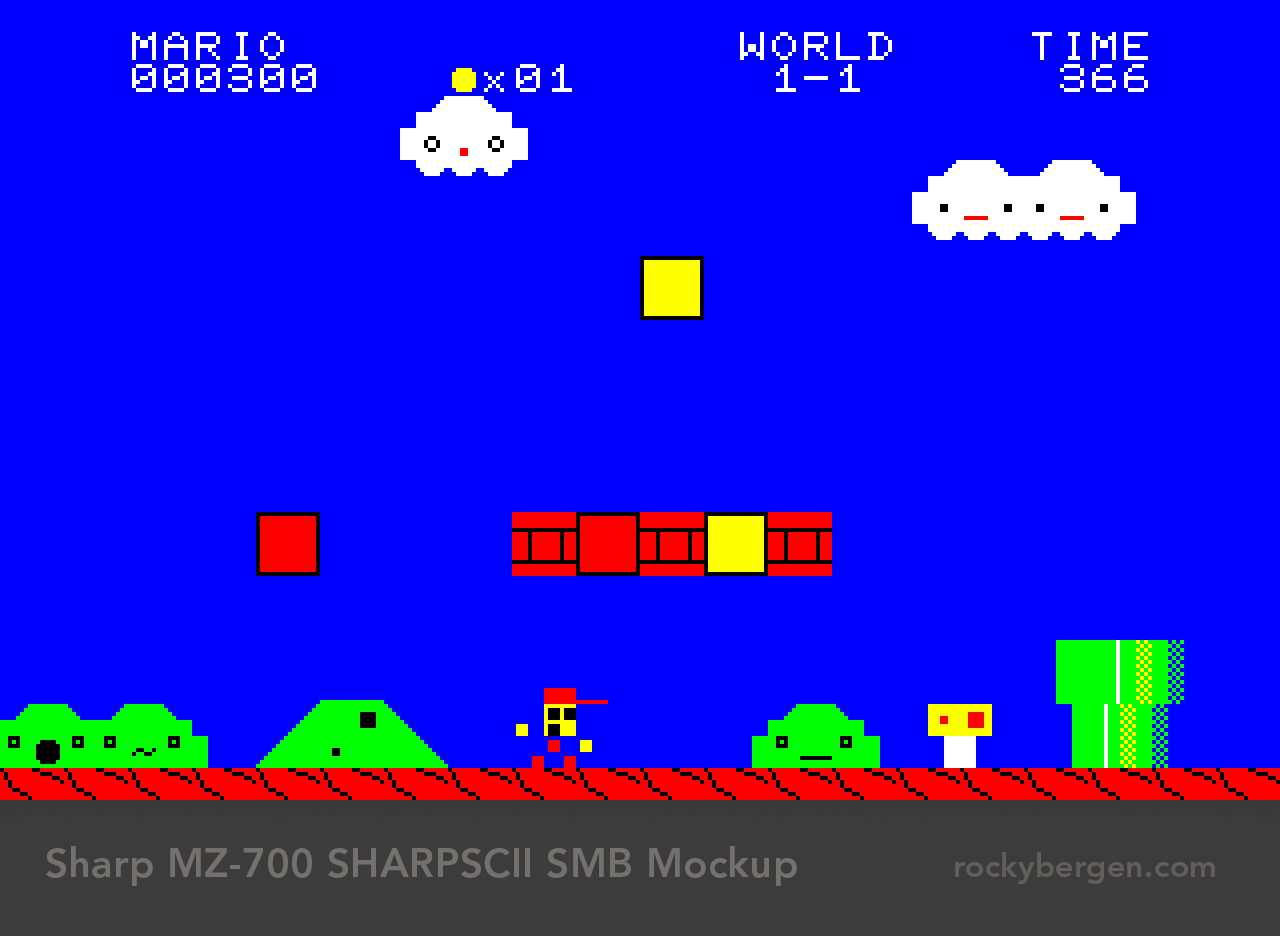
Sharp MZ-700 Super Mario Bros Mockup

December 16, 2017

I grew up making PETSCII illustrations on my C64 so I had to try my hand at some SHARPSCII.

In Graphics, Retro, Mock-up Tags Sharp, SHARPSCII, MZ-700, retrocomputer, japanese, pixel art

Amstrad CPC 464 Paper Craft

January 21, 2017

Please enjoy this paper craft version of the Amstrad CPC 464 available for download here! It's the closest I've ever been to touching the real thing. As a Canadian I never grew up with these machines but there's something magical about UK silicon.

Congratulations James on the first issue of Colour Personal Computing!

Congratulations James on the first issue of Colour Personal Computing!

In paper craft, Retro, Illustration Tags pepakura, papercraft, amstrad, retrocomputer, 80s
World 1 Map - Mario at various stages of progress

Retro Challenge 2016/10 - Day 2

October 2, 2016

Day two and I am seeing double-wide Commodore pixels in my dreams.

In Commodore, Graphics, nintendo Tags retrocomputer, C64, commodore, nes, Nintendo, super mario, mario, pixel art, game dev

Amstrad CPC 464 Paper Craft Computer

September 27, 2016

A paper craft version of the Amstrad CPC 464 available for download here! Please enjoy.

This paper craft model of the Amstrad CPC is as close I am likely to get to the UK classic 8-bit computer. Even though it is not a computer I had exposure to as a kid, YouTube has provided me with many hours of entertainment with this system. Here's…
In Industrial Design, paper craft, Retro Tags amstrad, cpc, 464, 8bit, retrocomputer, uk, pepakura, papercraft, paperart, free, download

Latest & Greatest

Featured
1-Arduwatch-Orange-vs-Green.jpg
March 5, 2022
Bergen - Arduwatch Design
March 5, 2022
Read more →
March 5, 2022
1BOOK-BOX-RED-ON-SITE.jpg
February 26, 2022
Book Box - Mini Outdoor Community Libraries
February 26, 2022
Read more →
February 26, 2022
Cat-Pods-Loft-Plain-Jane.jpg
February 12, 2022
Cat Pod - Cat Shelter Design
February 12, 2022
Read more →
February 12, 2022
1-M65-LT-Glamour.jpg
February 5, 2022
Commodore 65 - Laptop Design - 65-LT
February 5, 2022
Read more →
February 5, 2022
PET-Keyboard-v001.jpg
February 5, 2022
Commodore PET Keyboard Design
February 5, 2022
Read more →
February 5, 2022
Chrono Render 1
June 20, 2021
Bergen Watches - New Vintage Chronograph Design WIP
June 20, 2021
Read more →
June 20, 2021
Pixel Bundle
June 12, 2021
Amiga Cartoon Classics Papercraft
June 12, 2021
Read more →
June 12, 2021
June 11, 2021
Waxwings in our back yard
June 11, 2021
Read more →
June 11, 2021
IMG_1707.JPG
February 14, 2021
Commodore PET/CBM 2001 - Papercraft Design
February 14, 2021
Read more →
February 14, 2021
NV-4.png
February 14, 2021
Bergen - New Vintage Chronograph Design
February 14, 2021
Read more →
February 14, 2021

Get In Touch

let's talk about Great design!

A collection of illustrations, designs, other art, and the occasional meandering. If you are interested in working with me please have a look at my portfolio and feel free to drop me a line!

Powered by Squarespace